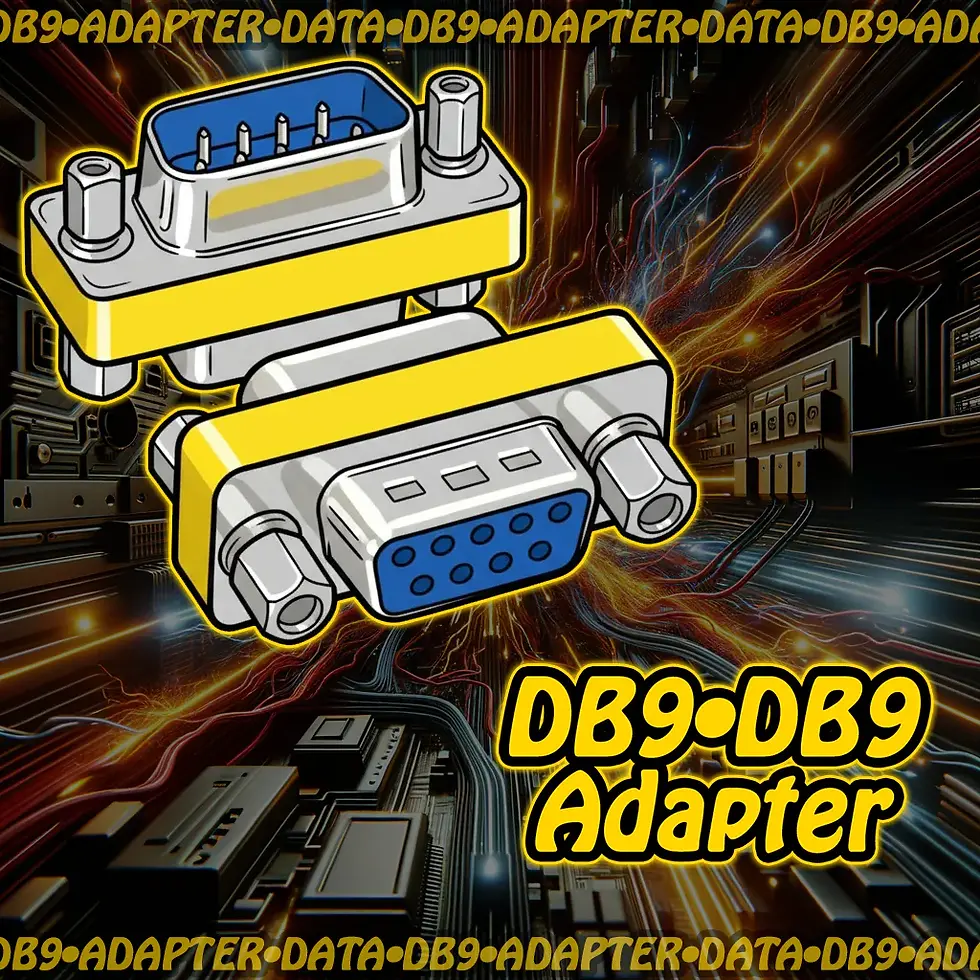
🧠 DB9 to DB9 Straight‑Through Serial Cable (Male ↔ Female)
(RS‑232 Serial Cable • 9‑Pin D‑Sub Male to Female • Direct Pin Mapping)
This cable links two DB9‑equipped devices for serial communication using a 1:1 pinout. It’s commonly used in industrial, networking, and legacy computing environments.
🔧 Cable Form
- DB9 male connector on one end
- DB9 female connector on the other
- Straight‑through wiring: pin 1 → pin 1, pin 2 → pin 2, etc.
- Shielded cable with molded strain relief
- Lengths range from 3ft to 100ft
- RS‑232 compliant
🖥️ Compatible Devices
- PCs and laptops with DB9 serial ports
- Modems (external RS‑232 models)
- Routers and switches with DB9 console ports
- Industrial controllers (PLCs, sensors, CNC machines)
- Embedded systems with DB9 serial interfaces
- ✅ Any device pair with opposite gender DB9 ports expecting direct RS‑232 signaling
✅ Common Uses
- 🔄 Serial communication between host and peripheral
- 🔌 PC to modem or router to console setups
- 🧩 PLC to sensor/controller links in industrial automation
- 🧪 Legacy device interfacing (GPS, barcode scanners, lab equipment)
- 🧵 Debugging and firmware flashing via serial console
🧠 Signal Format
- ⚡ RS‑232 standard
- 🔌 Straight‑through pinout:
- Pin 2 (TX) → Pin 2 (TX)
- Pin 3 (RX) → Pin 3 (RX)
- Pin 5 (GND) → Pin 5 (GND)
- Remaining pins map identically
- 🔁 No crossover — not suitable for direct PC‑to‑PC links
⚠️ Things to Watch Out For
- 📉 Not interchangeable with null modem cables (which cross TX/RX)
- 🔌 Both devices must expect straight‑through signaling
- 🧯 Using this cable in a null modem scenario will result in communication failure
- 📏 Gender matters — only works with DB9 male ↔ DB9 female port pairing
🛠️ Quick Tips for Beginners
- 🧭 Confirm both devices have opposite gender DB9 ports and expect straight‑through wiring
- 🔌 Use for host‑to‑peripheral setups, not peer‑to‑peer
- 🧪 For PC‑to‑PC or device‑to‑device links, use a null modem cable instead
- 🧯 Label clearly — DB9 cables look identical externally but differ internally
DB9 → DB9 Serial Cable • Straight • Male → Female • Bidirectional
From $5.00Sale Price